- Phone +256-782-356-092 Phone +256-753-410-102
- Email: info@petroservicesltd.com
Civil
- Home
- Civil
Main Services
Follow Us
Civil Works
Civil works at a fuel station provide the structural foundation and environmental containment systems required for safe operation. For 2025, these works must increasingly account for climate resilience, strict zoning regulations, and future-proofing for electric vehicle (EV) infrastructure.
Civil work details:
01. Site Preparation and Earthworks
- Site Clearance: Clearing the land of vegetation, debris, and existing structures to prepare for a level construction surface.
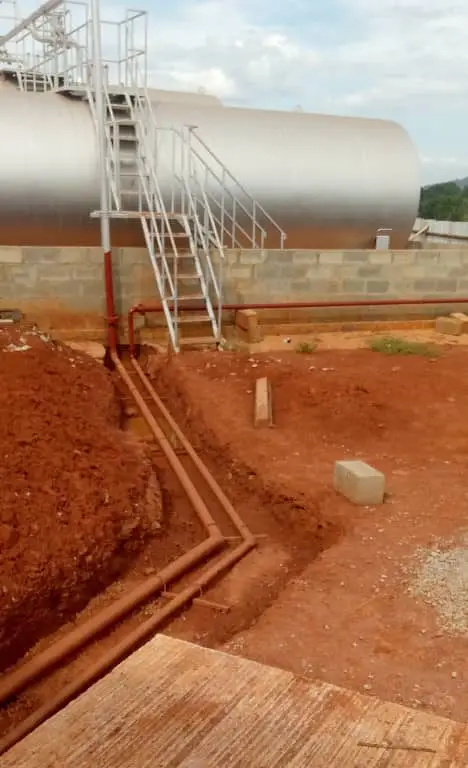
- Bulk Excavation: Excavating deep pits for underground storage tanks (USTs) and trenches for fuel, electrical, and drainage pipelines.
- Subgrade Stabilization: Compacting the soil and using select fill materials to create a stable base that prevents the site from sinking or shifting under heavy traffic.
02. Structural Foundations and Concrete Works
- Tank Cradles and Slabs: Constructing reinforced concrete “cradles” or slabs at the base of excavation pits to securely anchor fuel tanks.
- Canopy Foundations: Casting deep concrete footings and anchor bolts to support the structural steel columns of the forecourt canopy.
- Forecourt Pavement: Laying heavy-duty concrete slabs (aprons) in dispensing areas, often reinforced to withstand the high shear forces of turning vehicles.
- Building Construction: Erecting the masonry or steel-framed convenience store, including all structural walls, roofing, and interior partitioning.
03. Drainage and Environmental Containment
- Oil-Water Separators (OWS): Installing specialized underground interceptor tanks that treat runoff water to remove oil and fuel contaminants before it enters public sewers.
- Forecourt Drainage Channels: Installing monolithic, heavy-load-rated (Class F900) drainage gratings to capture spills and rainwater across the station.
- Containment Sumps: Fitting concrete or fiberglass sumps around tank manholes and dispensers to provide secondary containment for potential leaks.
04. Infrastructure and Finishing
- Access Roads: Constructing acceleration and deceleration lanes, as well as entrances and exits designed for safe vehicle maneuvering.
- Raised Curbs and Walkways: Installing concrete curbs (typically at least 100mm–120mm high) to define traffic lanes and protect pedestrian sidewalks.
- Signage Pylons: Building reinforced concrete bases for large advertising pylons that display fuel prices and branding.
- Landscaping: Preparing green spaces, which many 2025 regulations require to cover at least 10% of the station’s total plot area.